
What Is Audio Video Technology? Types, Benefits and Applications in Dubai
Audio and video technology has become an important part of how people communicate, work, learn and enjoy entertainment. From a home cinema and multi-room music system to a modern conference room or digital display in a retail store, audio-video technology brings sound, images and communication tools together in one connected environment.
But what exactly is audio video technology, and how does it work?
In simple terms, audio video technology refers to the equipment, systems and solutions used to capture, process, transmit, display and control sound and visual content. Depending on the application, an AV system can include speakers, microphones, displays, projectors, cameras, amplifiers, control systems, video conferencing equipment and digital signage.
In Dubai, the demand for professional AV systems is growing across homes, offices, hotels, restaurants, retail spaces and other commercial environments. The right system can improve communication, create better entertainment experiences and make spaces more interactive and convenient.
What Is Audio Video Technology?
Audio video technology, commonly called AV technology, combines audio and visual equipment to deliver information, communication or entertainment. A basic example is a television with built-in speakers. More advanced systems can connect several components together, allowing users to control sound, displays, lighting and other equipment through a centralized interface.
For example, a modern meeting room may include:
- Large display or projector
- Conference camera
- Microphones
- Speakers
- Video conferencing platform
- Wireless presentation system
- Centralized control panel
Similarly, a smart home may use a combination of televisions, speakers, projectors, home cinema equipment and automation controls. The important difference between individual AV devices and a professional AV system is integration. Instead of having several disconnected devices, an integrated system allows different components to work together smoothly.
How Does Audio Video Technology Work?
An AV system generally involves three basic stages: input, processing and output.
1. Input
Input devices capture audio or visual information.
Examples include:
- Microphones
- Cameras
- Laptops
- Media players
- Streaming devices
- Presentation systems
- Sensors and other connected devices
For example, a microphone captures a speaker’s voice during a conference.
2. Processing
The captured information is processed and distributed to the appropriate equipment.
This can involve:
- AV receivers
- Amplifiers
- Audio processors
- Video processors
- Control systems
- Network equipment
Processing helps ensure that audio and video signals reach the right destinations with suitable quality and timing.
3. Output
The final content is delivered through output devices.
Common examples include:
- Speakers
- Televisions
- Projectors
- LED displays
- Video walls
- Interactive screens
- Headphones
A professionally designed system ensures that these components work together rather than operating as separate devices.
Types of Audio Video Technology
AV technology covers a wide range of systems. The right combination depends on the purpose, property type, room size and user requirements.
1. Home Cinema Systems
Home cinema is one of the most popular residential applications of AV technology. A professionally designed home cinema can combine a projector or large display with surround sound, amplifiers, acoustic treatment, media players and smart control.
Instead of simply watching a movie on a television, homeowners can create an immersive entertainment environment where the audio, video and room controls work together. Home cinema systems can also be integrated with lighting, motorized curtains and other smart home functions.
2. Multi-Room Audio Systems
Multi-room audio allows music to be distributed across different areas of a property. For example, a homeowner could play the same music throughout the house or choose different audio for individual rooms.
Multi-room audio is also useful in:
- Hotels
- Restaurants
- Retail stores
- Offices
- Villas
- Hospitality environments
With centralized or app-based control, users can manage volume, music sources and individual zones from a single interface.
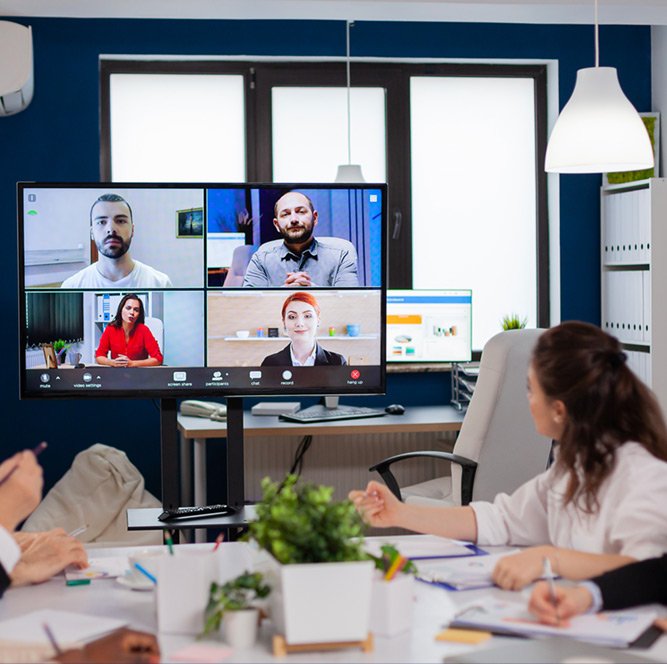
3. Video Conferencing Systems
Modern businesses increasingly depend on video conferencing for communication with employees, customers and partners. A professional conference room AV system may include cameras, microphones, speakers, displays and wireless presentation tools. The goal is to make meetings easier to start and more natural to conduct, whether participants are sitting in the same office or joining remotely. A properly designed conference room can also reduce common problems such as poor microphone pickup, unclear images and difficult screen sharing.
4. Digital Signage
Digital signage uses electronic displays to communicate information, advertising or other visual content.
Businesses in Dubai use digital signage in places such as:
- Shopping malls
- Hotels
- Restaurants
- Corporate offices
- Retail stores
- Reception areas
- Public venues
Digital signage can display videos, images, announcements, menus, promotional offers and real-time information.
With a content management system, businesses can also update multiple screens remotely.
5. Video Walls and Large Displays
Video walls combine multiple displays or LED panels to create a large visual surface. They are particularly useful where businesses need high-impact visual communication.
Common applications include:
- Corporate lobbies
- Control rooms
- Retail environments
- Hospitality venues
- Showrooms
- Events
- Experience centers
The size, resolution and configuration of a video wall can be customized according to the available space and viewing requirements.
6. Commercial AV Systems
Commercial AV systems are designed for professional environments where reliable communication and presentation are important.
A commercial AV setup may include:
- Meeting room displays
- Projectors
- Conference cameras
- Microphones
- Speakers
- Presentation systems
- Digital signage
- Centralized control
The system can be designed around the way employees, customers and visitors use the space.
Benefits of Audio Video Technology
Investing in the right AV technology is not simply about adding more equipment. A well-designed system can improve the overall experience of a space.
Better Communication
In offices, professional AV systems can make presentations and video meetings clearer and easier to manage. High-quality microphones, speakers and displays help participants communicate more effectively.
Improved Entertainment
For homes, AV technology can transform everyday entertainment. A combination of high-quality audio, large displays, projectors and smart controls can create a more immersive experience for movies, music, gaming and other content.
Centralized Control
Modern AV systems can connect multiple devices to a centralized control platform. Instead of operating each device separately, users may be able to control different functions from a smartphone, tablet, touch panel or dedicated control system.
Better User Experience
A professionally designed AV system should be simple to use. Automation can allow users to create predefined scenes. For example, a “Movie Mode” could turn on the projector, start the audio system, lower motorized curtains and adjust the room lighting with a single command.
Flexible and Scalable Systems
A properly planned AV system can be designed for future expansion. Businesses may later add additional displays, meeting rooms or audio zones, while homeowners may want to expand their entertainment system or integrate additional smart home functions. Planning for scalability from the beginning can make future upgrades easier.
Audio Video Technology for Homes in Dubai
Dubai’s residential market includes everything from apartments to large villas, and AV requirements can vary significantly between properties. A homeowner may only need a simple multi-room audio system, while another may want a complete home cinema integrated with smart home automation.
Residential AV systems can include:
- Home cinema
- Multi-room audio
- Smart TVs and displays
- Projectors
- Surround sound
- Media distribution
- Motorized curtains
- Smart AV control
The design should take into account room dimensions, acoustics, interior design, viewing distance and the homeowner’s lifestyle. This is particularly important for dedicated home cinema rooms, where speaker positioning, acoustic treatment, screen size and projector selection can significantly affect the final experience.
Audio Video Technology for Businesses in Dubai
Businesses have different AV requirements depending on their industry and environment. A corporate office may require conference room technology and presentation systems, while a hotel may need background music, digital signage and event AV infrastructure. Retail businesses can use digital displays and video walls to attract attention, while restaurants can use digital menu boards and background music to improve the customer experience.
Professional audio video solutions in Dubai can therefore be designed around the specific objectives of each business rather than relying on a standard package.
What Should You Consider Before Installing an AV System?
Before choosing AV equipment, it is important to consider more than just specifications and prices.
Purpose of the System
First determine what you want the system to achieve.
Is it primarily for:
- Entertainment?
- Video conferencing?
- Presentations?
- Background music?
- Digital signage?
- Customer engagement?
- Home automation?
Size and Layout of the Space
Room size and layout affect speaker placement, screen size, projector selection and acoustic performance. A system designed for a small meeting room may not be suitable for a large conference hall.
Ease of Use
A technically advanced system is not useful if users find it difficult to operate. Choose a solution with intuitive controls and automation where appropriate.
Integration
Consider whether the AV system needs to connect with existing technology such as smart home automation, lighting, networking or building management systems. Integration can create a more seamless experience and reduce the need for multiple control interfaces.
Future Expansion
Think about future requirements before installation. A scalable system can make it easier to add additional rooms, displays, speakers or other equipment later.
Professional Installation
Correct installation is just as important as selecting good-quality equipment. Speaker positioning, cabling, calibration, networking, display installation and system programming can all affect performance. Professional AV installation can help ensure that the equipment works together as intended.
Why Professional AV Design Matters
Buying individual AV products does not automatically create a good AV system.
For example, a high-end speaker may still deliver disappointing sound if it is positioned incorrectly or installed in a room with significant acoustic problems.
Similarly, a large display may not be the right choice for a particular viewing distance or room layout. Professional AV design considers the entire environment rather than individual products. This can include equipment selection, room acoustics, cable infrastructure, system integration, control programming, installation and testing. For businesses and homeowners looking for AV systems in Dubai, this approach can result in a more reliable and easier-to-use solution.
The Future of Audio Video Technology
AV technology continues to move toward greater integration, automation and connectivity. Modern systems are increasingly connected to smart home and building automation platforms, allowing users to manage multiple functions from a single interface. Wireless technologies, cloud-based management, higher-resolution displays, immersive audio and intelligent control systems are also influencing the development of modern AV environments.
For businesses, this means AV is becoming more than a presentation or communication tool. It can become part of the overall digital infrastructure of a workplace, retail environment or hospitality property. For homeowners, AV technology is becoming an important part of smart living, combining entertainment with lighting, climate control and other automated functions.
Choosing Audio Video Solutions in Dubai
The right AV system depends on the space, purpose, budget and level of integration required. Whether you are planning a home cinema, multi-room audio system, conference room, digital signage network or complete commercial AV installation, professional planning can help you avoid compatibility issues and unnecessary equipment costs.
Orbit Pix Information Technology provides audio video solutions in Dubai for residential and commercial environments. Its AV services include system design, installation, integration and support for applications such as home cinema, multi-room audio, conference room AV, digital signage and other integrated AV systems.
Conclusion
Audio video technology has evolved far beyond televisions, speakers and projectors. Today, AV systems can connect communication, entertainment, displays, automation and digital experiences into one integrated environment. From a smart home cinema in a Dubai villa to a fully equipped corporate meeting room, the possibilities depend on how the technology is designed and integrated.
If you are considering an AV project, start by identifying what you want the system to achieve, how the space will be used and what you may need in the future. A properly planned AV system can provide better performance, greater convenience and a much more seamless user experience.
For businesses and homeowners exploring professional audio video solutions in Dubai, choosing an experienced AV technology partner can make the difference between a collection of devices and a genuinely integrated system.
No Comments